

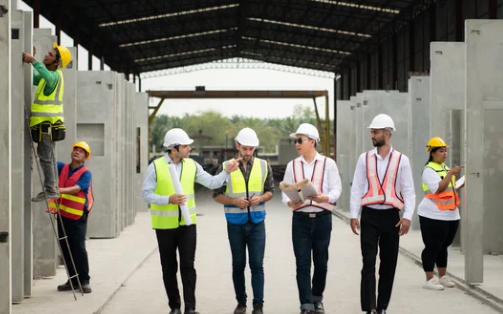
It’s 2:40 on a Thursday afternoon and the owner is over Ohio, headed to a customer meeting. Back at the plant, a batch came off the mixer wetter than spec, two forms are filled, and the crew is waiting to hear what happens next. Nobody calls the owner. The production supervisor pulls the batch ticket, checks the slump log with QC, holds the pieces for inspection, and adjusts the next batch. When the plane lands, a two-line text is waiting: what happened, what was done, what gets checked tomorrow.
That is mid-level leadership in manufacturing doing its job. A problem handled at the right level, by someone who knew the standard, made the call, and closed the loop.
Most owners have lived the other version too. The phone rings in the car. Three people have three opinions and nobody wants to own the decision. The pieces ship, the customer rejects them, and Monday’s conversation is about blame instead of process.
The difference between those two afternoons is rarely the equipment or the mix design. It’s the people in the middle.
Why Mid-Level Leadership in Manufacturing Gets Overlooked
Supervisors, lead hands, shift managers, and plant managers sit in the least glamorous seat in the company. Owners and executives set direction. Operators produce product. The middle layer translates one into the other every shift, usually without much recognition and even less training.
Across hundreds of plant visits, the pattern is consistent. The middle gets attention when something breaks. A request for a new batch plant gets a full business case. The promotion of a new second-shift supervisor gets a handshake and a set of keys.
That imbalance is expensive. Your mid-level leaders decide whether a standard is enforced at 3 a.m., whether a near miss gets reported, whether a new hire stays past ninety days, and whether the plan from Monday’s meeting survives until Friday. Strategy set at the top only becomes real when it passes through them.
Why Strong Middle Managers Are Hard to Find
Most manufacturing companies build their middle layer the same way. They promote the best operator, the most reliable welder, or the person who knows the batch plant better than anyone. It makes sense. That person has earned respect and knows the work.
Then three things happen.
First, the new supervisor keeps doing the old job. When a line goes down, they grab the wrench because that’s where they’re confident. The crew watches their leader fix problems instead of building a team that can.
Second, nobody defines the new job. The supervisor inherits responsibility for output, safety, quality, and people, with no clear sense of which decisions are theirs and which belong upstairs. So they guess. Some guess conservatively and escalate everything. Others guess aggressively and create problems the owner hears about later.
Third, the owner stays involved. In founder-led and family businesses especially, the owner still walks the floor and still answers the calls. Every time the owner makes a call that belonged to the supervisor, the supervisor learns their judgment is optional. This is why so many plants struggle with escalation, and why fixing it starts with clear decision rights at every level rather than another communication workshop.
None of this reflects bad people. It reflects a system that promotes for technical skill and then expects leadership to appear on its own.
Six Traits of Strong Mid-Level Leadership in Manufacturing
Strong mid-level leaders look different from plant to plant, but their habits are remarkably consistent. These six show up most often in plants that run well without the owner in the building.
They Own the Result, Not Just the Task
A weak supervisor reports that the crew ran four hundred pieces. A strong one knows how many were first-pass good, why the other twelve weren’t, and what changes tomorrow. Ownership means treating the shift’s outcome as their own, including the parts that went wrong.
They Make Decisions Inside Clear Boundaries
Strong mid-level leaders know where their authority starts and stops. They don’t escalate a decision they’re equipped to make, and they don’t make one that belongs above them. When the boundary is unclear, they ask once, get the answer, and apply it going forward. That clarity is what lets an owner get on a plane.
They Translate Priorities Into the Daily Plan
Leadership says on-time delivery is the priority this quarter. A strong plant manager turns that into a sequence change, a revised pour schedule, and a conversation with the yard crew about staging. A weak one repeats the message at the huddle and hopes it sticks. Translation is the core skill of the middle layer, and it’s rarely taught.
They Develop the People Below Them
The best supervisors are always building their replacement. They let a lead operator run the huddle. They explain why a decision was made, not just what it was. They notice who asks good questions and who steps up when someone calls out. Many of your future supervisors are already on the floor, and strong mid-level leaders are usually the first to spot high-potential talent before it walks out the door.
They Tell the Truth Upward, Early
Bad news does not improve with age. A strong mid-level leader tells the plant manager on Tuesday that the new form won’t be ready for Friday’s pour, not on Thursday night. They bring the problem, the options, and a recommendation. That takes trust in both directions, and it takes an owner who doesn’t punish the messenger.
They Hold the Standard When Nobody Is Watching
Culture in a plant is set by what the supervisor tolerates on second shift. If lockout gets skipped once and nothing is said, the standard just changed. Strong mid-level leaders hold the line consistently and fairly, without needing the owner there in person to back them up.
What Owners Can Do to Build Mid-Level Leadership in Manufacturing
Strong middle managers are rarely hired fully formed. They’re built. The building blocks are practical and within reach of any business, from $5M to $500M.
Define the role before you fill it. Write down what a supervisor or plant manager is accountable for, what they decide on their own, what they decide with input, and what they escalate. One page is enough. Most friction in the middle comes from roles that were never defined.
Stop answering the calls that aren’t yours. This is the hardest step for founders. When a supervisor calls with a decision they should make, ask what they’d do, then tell them to do it. It will feel slower for a few weeks. After that, it gets much faster.
Train for leadership, not just operations. Your new supervisors know how to run the equipment. Few have been taught how to run a huddle, give corrective feedback, settle a conflict between two operators, or build a schedule around a constraint. Those are learnable skills, and leaving them to chance is the most expensive way to develop them. The long-term return on leadership development consistently beats the cost of turnover, rework, and owner time spent firefighting.
Give them the numbers. Mid-level leaders can’t own results they can’t see. Share scrap rates, first-pass yield, overtime, safety data, and delivery performance at the shift level. Keep it simple and visible. Supervisors who can see the scoreboard start playing to win.
Meet with them one on one. Thirty minutes every other week between a plant manager and each supervisor does more for development than any annual review. Talk about what’s working, what’s stuck, and what they need.
Promote with intention. Before you promote your best operator, ask whether they want to lead people or simply earned a raise. Consider a lead role or a trial period first. Some of your best technical people should stay technical, with a career path that recognizes it.
The Cost of a Weak Middle Layer
A weak bench of mid-level leadership in manufacturing rarely shows up as one big event. It shows up as drag.
The owner can’t step away, so growth is capped at the owner’s personal bandwidth. Good operators leave because their supervisor never developed them or treated them fairly. Standards drift shift by shift until quality problems reach the customer. New initiatives stall because nobody translates them into daily work. And when the time comes for a transition or sale, a buyer looks at the organization chart and sees key-person risk everywhere.
That last point matters more than most owners expect. Buyers and investors pay for businesses that run without the founder. A plant with capable supervisors and a plant manager who owns results is a different asset than one where every decision routes through the corner office. Valuation follows.
Where to Start
Strong mid-level leadership in manufacturing doesn’t come from a single hire or a weekend seminar. It comes from clear roles, real authority, practical training, and an owner willing to let go of decisions that belong elsewhere.
Start small. Pick one supervisor and one recurring decision that currently routes to you. Define the boundary, hand it over, and hold them to it. Watch what happens over the next month. Most owners are surprised by how much capability was already there, waiting for room.
The plants that run well at 2:40 on a Thursday with the owner on a plane didn’t get lucky. They built a middle layer that can carry the weight. That work is worth starting now.